
The manufacture of components in the aerospace industry is a critical task that requires careful material selection. Among the many options available, two stand out for their unique characteristics: Inconel and titanium.
In this article, we take an in-depth look at how these two materials compare, analysing their properties, advantages, disadvantages and examples of applications in the aerospace industry. By understanding the key differences between Inconel and titanium, you will be able to make informed decisions about which of these materials is best suited to your specific needs in aerospace component manufacturing. We will also discuss the machining of Inconel and titanium in aerospace.
Properties of Inconel:
Inconel is a family of nickel-based alloys widely recognised for its excellent resistance to heat and corrosion. These are some of the key properties of Inconel:High-temperature resistance:
Inconel is known for its ability to retain its mechanical properties at extremely high temperatures. This makes it an ideal material for components that operate in conditions of intense heat, such as aircraft engine nozzles.Corrosion resistance:
It is highly resistant to corrosion, making it suitable for applications where exposure to aggressive environments is a concern, such as aircraft exhaust systems.Durability:
It is a durable material that can withstand repeated loads without significant deterioration. This is fundamental for critical components in the aerospace industry.Properties of titanium:
Titanium is a metal known for its high strength, low density and excellent corrosion resistance. Some of the outstanding properties of titanium are:High strength and low weight:
This material has one of the best strength-to-density ratios of all metallic materials. This makes it a popular choice for applications where reducing aircraft weight is essential.Corrosion resistance:
Like Inconel, titanium is corrosion resistant, making it suitable for components exposed to humid and saline environments.Low density:
Titanium is approximately 45% lighter than steel, which helps to reduce the overall weight of the aircraft, improving efficiency and performance.Advantages of Inconel in the aerospace industry:
- High resistance to extreme temperatures: Inconel is essential for components exposed to high temperatures, such as engine nozzles and exhaust systems.
- Durability and corrosion resistance: It guarantees the structural integrity and longevity of components in aggressive environments.
Advantages of titanium in the aerospace industry:
- Low weight and high strength: Ideal for structural components that require a combination of strength and lightness.
- Corrosion resistance and durability: It contributes to passenger safety and comfort in cabin applications.
Choosing the right material: Inconel vs titanium
The choice between Inconel and titanium depends on the specific needs of your aerospace project. Both materials have unique characteristics that make them ideal for different types of components and situations.Inconel excels in applications involving high temperatures and exposure to corrosion, such as engine nozzles and exhaust systems. Its ability to maintain structural integrity in extreme conditions is unrivalled.
Titanium, on the other hand, stands out in applications that require a combination of high strength and low weight, such as aircraft structural components. Its lightness and strength make it a logical choice for reducing the overall weight of the aircraft, improving efficiency and performance.
In many cases, the choice is not either/or. Combining both materials in one aircraft is common, to make the most of the advantages of each. This shows that the aerospace industry values the versatility and specific properties of these two materials.
Ultimately, the right choice depends on careful analysis of the application's requirements, taking into account factors such as operating temperature, weight, strength and exposure to corrosive environments. Comparing materials such as Inconel and titanium is fundamental to ensuring the safety, performance and durability of aircraft in the modern aerospace industry.
Machining Inconel and titanium in the aerospace industry
Machining materials such as Inconel and titanium in the aerospace industry is a critical process that requires highly specialised machines, especially 5-axis machining centres. These are the key features of 5-axis machining centres that are essential for tackling these challenging materials:High-rigidity structure:
5-axis machining machines must have a solid, rigid structure to counteract the vibration and cutting forces generated when machining Inconel and titanium. Rigidity ensures precise operation, preventing part distortion and guaranteeing high-quality finishes.Powerful high-speed spindle:
Machining Inconel and titanium requires the ability to reach significant cutting speeds. 5-axis machining centres must be equipped with high-speed, high-power spindles to tackle these tough materials effectively.Advanced cooling systems:
Cooling systems are essential for controlling the temperature when machining Inconel and titanium. These materials generate high temperatures, and efficient cooling systems help to prevent tool damage while ensuring the integrity of the machined parts.Precise multi-axis movements:
5-axis machining centres must be able to perform highly precise movements in all five axes. This ensures the production of parts with tight tolerances and high-quality surfaces, which is critical in the aerospace industry.Advanced numerical control:
Advanced control systems allow precise programming of the cutting paths in all five axes, which is essential for smooth, efficient operation when machining such demanding materials.Fast, precise tool change:
Inconel and titanium often require specific cutting tools. 5-axis machining centres must have fast, precise tool change systems to minimise downtime and maintain productivity.Robust workholding system:
Workholding must be solid and secure to prevent vibration and ensure machining accuracy. Machining centres must have reliable workholding systems that hold the workpiece firmly in place, even in highly demanding machining applications.Examples of Inconel and titanium machining in the aerospace industry
Example 1 - Engine nozzles:In high-temperature applications such as jet engine nozzles, Inconel excels. Its resistance to heat and corrosion makes it ideal for withstanding the extreme conditions of high-speed combustion. Inconel maintains its structural integrity at temperatures above 1,000°C, an essential characteristic for critical components in aerospace engines.
Example 2 - Lightweight structures:
For structural components that require a combination of high strength and low density, titanium is a wise choice. Wing spars, landing gear and other structural components benefit from titanium's lightness, which contributes to fuel efficiency and the overall performance of the aircraft.
Example 3 - Exhaust systems:
Aircraft exhaust systems are exposed to high temperatures and corrosive environments due to engine emissions. In this application, Inconel stands out for its ability to withstand extremely high temperatures and corrosion. It ensures that exhaust systems remain durable and reliable over time.
Example 4 - Cabin components:
For aircraft cabin components such as seats, trays and window frames, where impact resistance and durability are fundamental, titanium can be an excellent choice. Its high strength and low weight contribute to passenger safety and comfort.
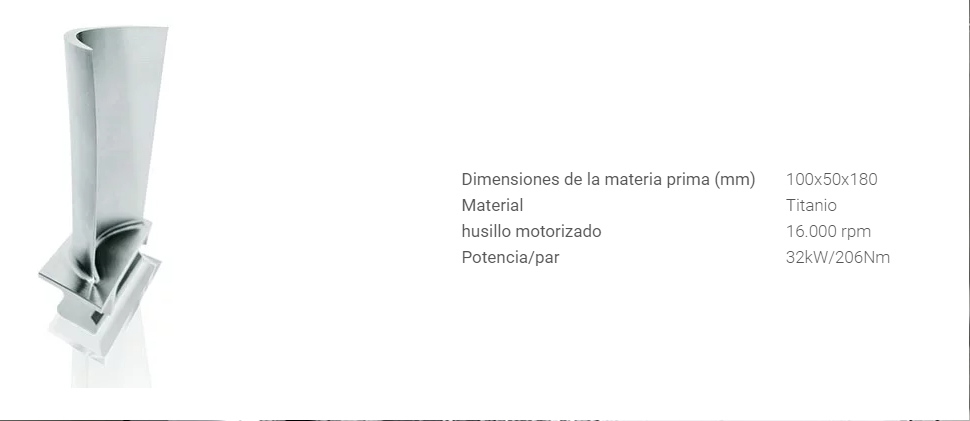
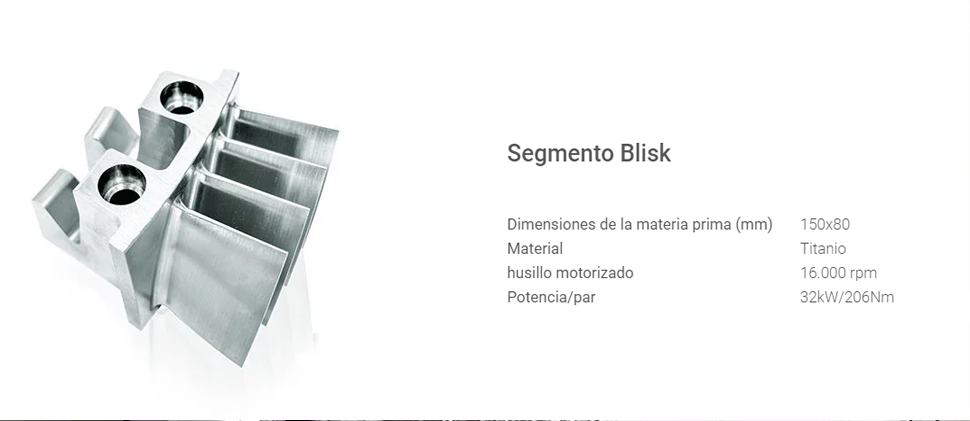
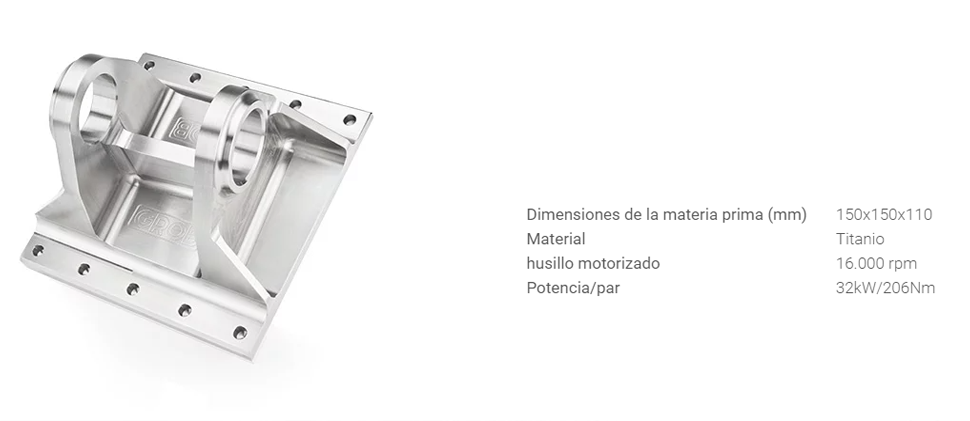
German manufacturer GROB WERKE offers machining centres with the perfect features for the aerospace industry:
- The unique retractable spindle virtually eliminates the possibility of collisions during tool changes while maximising the usable working area.
- Ergonomic design that allows easy access to the working area and requires less floor space than other machines with the same working envelope (buy one size smaller!).
- Ability to turn the table and the machine upside down for optimum chip evacuation.
- A wide range of automation is available for trouble-free production with optimum spindle utilisation and production efficiency.
- The overhead horizontal design guarantees constant rigidity along the entire Z-axis travel, resulting in unrivalled precision. Our machine is at its stiffest when the Z axis is at the workpiece! This ensures better tool life and productivity.
On the smallest model in the G series, the G150 offers:
- HSK-A63, 83 Nm, 12,000 min-1 (standard)
- HSK-A63, 206 Nm, 16,000 min-1
- HSK-A63, 47 Nm, 18,000 min-1
- HSK-A63, 47 Nm, 21,000 min-1
- HSK-A63, 63 Nm, 30,000 min-1
- HSK-A/T100, 340 Nm, 10,000 min-1
- HSK-A/T63, 206 Nm, 16,000 min-1
- HSK-A/T100, 261 Nm, 14,500 min-1
Discover GROB 5-axis machining centres