
Beyond 5 axes: process optimisation with CNC lathes and turning centres
While 5-axis technology and universal machining centres tend to grab the headlines on this blog thanks to their spectacular capabilities with complex geometries, turning remains a fundamental pillar of the metalworking industry.
For process engineers and workshop managers, the decision between investing in a conventional CNC lathe or stepping up to a multifunction turning centre determines line efficiency and the final cost per part.
At Ferrotall, we understand that optimising cycles does not always mean buying the most complex machine, but the one best suited to the type of part and the production volume.
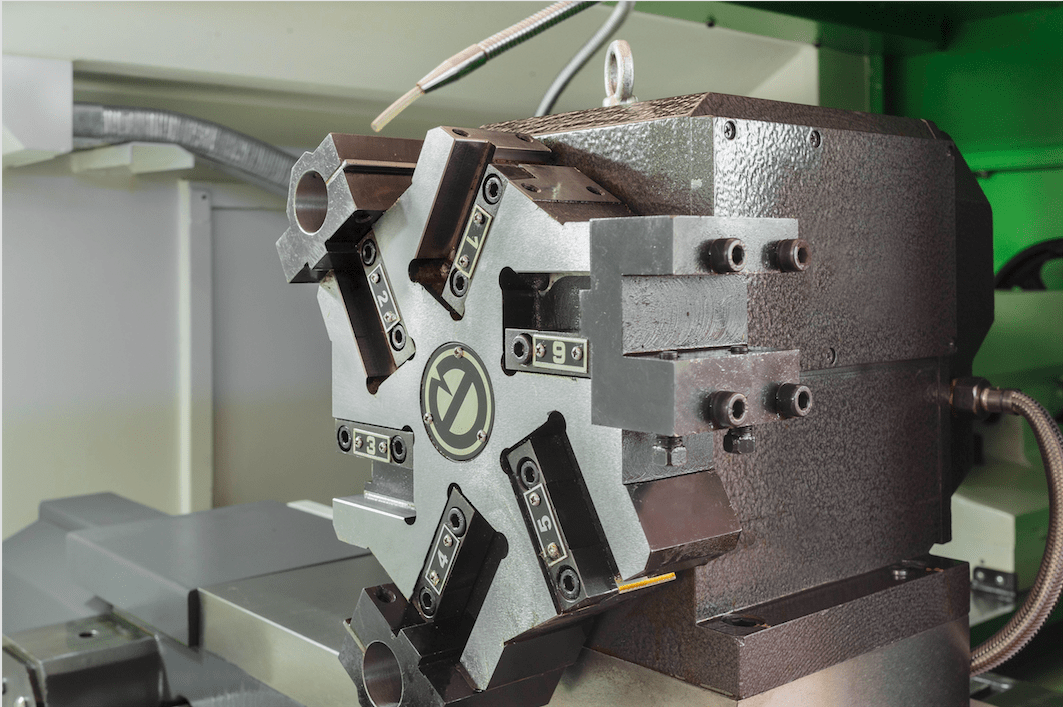
CNC lathe vs. turning centre
To make the right decision, it is important to break down the technical capabilities of each solution and how they solve specific machining problems:
- 2- and 3-axis CNC lathes. These machines are the very definition of efficiency for pure turning operations. Their architecture is optimised for fast roughing and precise finishing of cylindrical parts. They are the ideal choice for workshops seeking high repeatability in runs where secondary milling operations are non-existent or marginal. Their simplicity often translates into faster programming and easy maintenance.
- Turning centres (multi-tasking). This is where the line between turning and milling blurs. By integrating driven tools (C and Y axes) and sub-spindles, these machines enable the Done-in-One concept (completed in a single set-up). They are the technical answer for parts that require cross drilling, face milling or keyways without having to move the part to an additional machining centre.
The impact on productivity and workflow
The right choice has a direct impact on the workshop's bottom line by reducing idle time and improving quality.
- Fewer set-ups. A turning centre eliminates the need to transfer parts between machines. This not only reduces total cycle time but also eliminates the tolerance stack-up errors that occur when a part is re-clamped.
- Swarf management. Swarf management is critical in turning. Modern machines are designed to prevent swarf from building up in the cutting zone, which is vital for maintaining accuracy in demanding materials such as titanium or stainless steels.
- Flexibility vs. volume. While a pure CNC lathe is usually unbeatable in metal removal rate for simple shafts, a turning centre offers the flexibility needed for rapid design changes, which is crucial for sectors such as automotive or mould and die making.
Technical consultancy as added value
There is no universal "best machine", only an optimum solution for each machine shop. At Ferrotall, our approach is not simply to supply machinery but to analyse your drawings and processes in order to recommend the configuration that ensures the fastest return on investment and the greatest reliability.